সেরা ভিডিও

I'm a YC founder - I should talk about it more. People kept asking about this so why not make a vid about it?
From SAFEs to MFNs to the "standard deal", there's a lot to understand. Hope this helps!
Thumbnail by Cbonilladev
Edit by Ph4se0ne

YC Partner & Former Head of Growth at Airbnb, Gustaf Alströmer, gives tactical advice to answer the question: how do I get my first customers? Gustaf will cover this topic for all kinds of companies - whether you're B2B or B2C.
Apply to Y Combinator: https://yc.link/SUS-apply
Work at a startup: https://yc.link/SUS-jobs
Chapters (Powered by https://bit.ly/chapterme-yc) -
00:00 - Introduction
00:20 - Outline
00:44 - Do things that don't scale
03:40 - Founders should learn how to do sales
08:45 - The sales funnel
13:50 - Charging your first customer
15:24 - Working backwards from your goal
19:51 - Summary
#startup #tech #entrepreneur

In 2013, DoorDash applied to Y Combinator's Summer 2013 batch, and they were accepted. This is their application video.

There's never been a better time to start an AI company. Not just because there are new ideas, but because the tech finally makes old ones actually work.
On the Lightcone, Garry, Harj, Diana and Jared talk through the kinds of startups that are suddenly viable thanks to LLMs—from full-stack law firms to personalized tutors to recruiting platforms that can finally scale. They share the patterns they're seeing, the ideas they're excited about, and what it means to live at the edge of the future, where breakthroughs often look like second chances.
If you've been waiting for the right moment to build, this is it.
Apply to Y Combinator: https://ycombinator.com/apply
Work at a startup: https://workatastartup.com
Chapters (Powered by https://chapterme.co/) -
0:00 Intro
00:41 What startup ideas could not work before AI?
06:06 Technical screening products
07:35 Truly personalized education tools
09:48 Do better products automatically get better distribution?
14:41 Moats
16:08 The need for platform neutrality
17:40 Big Tech and AI
23:24 AI horseless carriages
25:14 Gross margins
30:03 Full stack companies
32:30 ML ops
37:14 Updated startup advice for the AI age
40:19 Outro
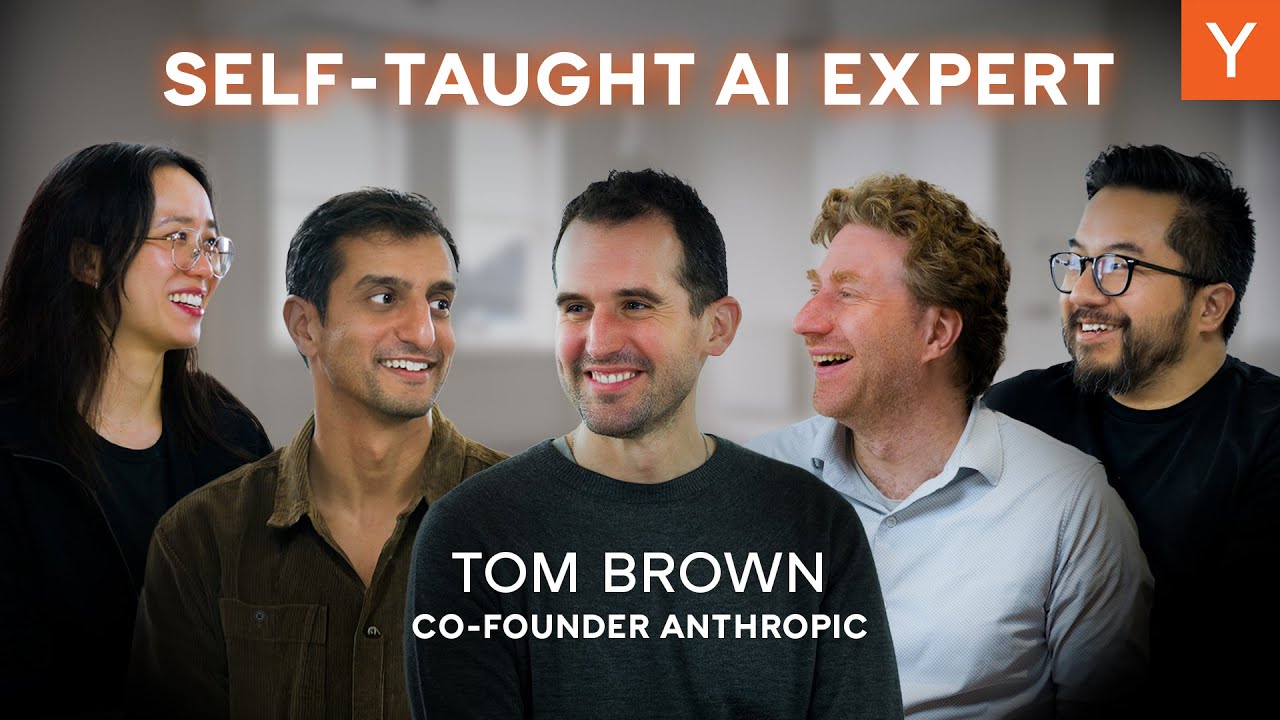
Tom Brown co-founded Anthropic after helping build GPT-3 at OpenAI. A self-taught engineer, he went from getting a B-minus in linear algebra to becoming one of the key people behind AI's scaling breakthroughs. And his work is paying off.
Today, Anthropic's Claude is the go-to choice for developers, and his team is overseeing what he calls "humanity's largest infrastructure buildout ever." On this episode of The Lightcone, he discusses his unconventional path from YC founder to AI researcher, the discovery of scaling laws that changed everything, and his advice for young engineers entering AI today.
Apply to Y Combinator: https://www.ycombinator.com/apply
Work at a startup: https://www.ycombinator.com/jobs
Chapters:
0:00 - From Failure to Success
2:30 - Early Startup Days at Linked Language
4:12 - The Grouper Dating Experiment
6:10 - Making the Leap to OpenAI
8:42 - First Product Launch Challenges
10:12 - Self-Teaching AI Research
12:44 - Building GPT-3 Infrastructure
15:44 - The Anthropic Spinoff
18:23 - Early Days of Building Claude
20:21 - The ChatGPT Wake-Up Call
22:08 - Claude 3.5 Sonnet Breakthrough
24:13 - Why Benchmarks Don't Tell the Whole Story
26:20 - Claude Code's Secret Sauce
28:51 - Building for the AI Agent
31:11 - The Largest Infrastructure Buildout Ever
32:46 - Multi-Chip Strategy
34:38 - Advice for the Next Generation

In order to get your startup off the ground it's critical to keep your co-founders motivated. One of the best ways to do that is to figure out a fair co-founder equity split. In this episode of Startup School, YC Group Partner Michael Seibel explains the ins and outs of co-founder equity, why it's important to be generous with that equity, and how to avoid bad advice that can lead to co-founder breakups.
Apply to Y Combinator: https://yc.link/SUS-apply
Work at a startup: https://yc.link/SUS-jobs
Chapters (Powered by https://bit.ly/chapterme-yc) -
00:00 - Intro
02:03 - Co-founder equity split
06:39 - Co-founders break-up
09:42 - Bad reasons for very unequal equity splits
14:06 - Common bad advice
17:14 - Final thoughts

A fireside with Elon Musk on June 16, 2025 at AI Startup School in San Francisco.
Before rockets and robots, Elon Musk was drilling holes through his office floor to borrow internet. In this candid talk, he walks through the early days of Zip2, the Falcon 1 launches that nearly ended SpaceX, and the “miracle” of Tesla surviving 2008.
He shares the thinking that guided him—building from first principles, doing useful things, and the belief that we’re in the middle of an intelligence big bang.
Apply to Y Combinator: https://ycombinator.com/apply
Work at a startup: https://workatastartup.com
Chapters:
00:00 - Intro
01:25 - His origin story
02:00 - Dream to help build the internet
04:40 - Zip2 and lessons learned
08:00 - PayPal
14:30 - Origin of SpaceX
18:30 - Building rockets from first principles
23:50 - Lessons in leadership
27:10 - Building up xAI
39:00 - Super intelligence and synthetic data
39:30 - Multi-planetary future
43:00 - Neuralink, AI safety and the singularity
48:10 - Message for the Next Generation of Builders

Join my community at http://JohnCoogan.com (enter your email)
Here’s my personal experience getting into Y Combinator and what I think you should do if you want to get in. BIG DISCLAIMER: I am not an expert, I don’t work for YC and haven’t been in one of the new, remote-only batches. YC is constantly evolving and improving their process for finding great companies, so I encourage you to get multiple opinions here and try and find advice directly from YC partners themselves. That being said, here’s what’s worked for me, and what I think is generally true about the YC application and interview process.
ABOUT Y COMBINATOR:
Y Combinator (YC) is an American seed investment startup accelerator launched in March 2005. It has been used to launch over 2,000 companies, including Stripe, Airbnb, Cruise Automation, DoorDash, Coinbase, Instacart, Dropbox, Twitch, and Reddit. The combined valuation of the top YC companies was over $300 billion as of January 2021. The company's accelerator program is held in Mountain View, California.
Y Combinator was founded in 2005 by Paul Graham, Jessica Livingston, Trevor Blackwell, and Robert Tappan Morris.
From 2005 to 2008, one program was held in Cambridge, Massachusetts, and one was held in Mountain View, California. As Y Combinator grew to 40 investments per year, running two programs became too much. In January 2009, Y Combinator announced that the Cambridge program would be closed and all future programs would take place in Silicon Valley.
In 2009, Sequoia Capital led the $2 million investment round into an entity of Y Combinator to enable them to invest in approximately 60 companies a year. The following year, Sequoia led an $8.25 million funding round for Y Combinator to further increase the number of startups the company could fund.
Then, in 2011, Yuri Milner and SV Angel offered every Y Combinator company a $150,000 convertible note investment. The amount put into each company was changed to $80,000 when Start Fund was renewed.
In September 2013, Paul Graham announced Y Combinator would fund nonprofit organizations that were accepted into the program after having tested the concept with Watsi (while continuing to fund mostly for-profit startups).
In 2014, founder Paul Graham announced he was stepping down and that Sam Altman would take over as president of Y Combinator. That same year, Altman announced "The New Deal" for YC startups, which offers $150,000 for 7% equity.
Late in 2014, Sam Altman announced a partnership with Transcriptic to provide increased support for Y Combinator's growing community of biotech companies. Then in 2015, he announced a partnership with Bolt and increased support for hardware companies.
The YC Fellowship Program was announced in July 2015, with the goal of funding companies at the idea or prototype stage. The first batch of YC Fellowship included 32 companies that received an equity-free grant instead of an investment.
In January 2016, Y Combinator announced version 2 of the Fellowship program, with participating companies receiving $20k investment for a 1.5% equity stake. The equity stake is structured as a convertible security that only converts into shares if a company has an initial public offering (IPO), or a funding event or acquisition that values the company at $100m or more. The YC Fellowship was short-lived. In September 2016, then CEO Sam Altman announced that the fellowship will be discontinued.
ABOUT JOHN COOGAN:
I am the co-founder of http://soylent.com and http://lucy.co, both of which were funded by Y Combinator (Summer 2012 and Winter 2018).
I've been an entrepreneur for nearly a decade across multiple companies. I've done a lot of work in silicon valley, so that's mostly what I talk about. I've raised over 10 rounds of venture capital totaling over $100m in total funding.
I work mostly in tech-enabled consumer packaged goods, meaning I use software to make the best products possible and then deliver them to the widest possible audience. I'm a big fan of machine learning, python programming, and motion graphics.
OTHER VIDEOS:
How Oculus VR & Anduril Founder Palmer Luckey Revolutionizes Dead Industries - https://youtu.be/zVLcoJS4fCg
The Saga of Naval Ravikant (Founder of AngelList) -
https://youtu.be/BtLFa9pEaDo
The Saga of Chamath Palihapitiya (SPAC Investor) - https://youtu.be/KFslVD3t_Oo
CONTACT:
You can get in touch with me via Twitter: https://twitter.com/johncoogan
Disclaimer: This video is purely my opinion and should not be regarded as a primary source. I am not a financial advisor and this is not a recommendation to buy or sell securities. Always do your own due diligence.

If you're a startup founder, how much should you charge for your product or service? It's a simple question that can make many lock up. What number should you pick? In this episode of Startup School, YC Group Partner Tom Blomfield guides you on how to come up with a price and then justify that number to customers.
Apply to Y Combinator: https://yc.link/SUS-apply
Work at a startup: https://yc.link/SUS-jobs
Chapters (Powered by https://bit.ly/chapterme-yc) -
00:00 - Intro
01:19 - The Value Equation
04:28 - Cost
06:26 - Competition
10:08 - Pricing
13:42 - Free trials
16:42 - Recap
17:30 - Outro
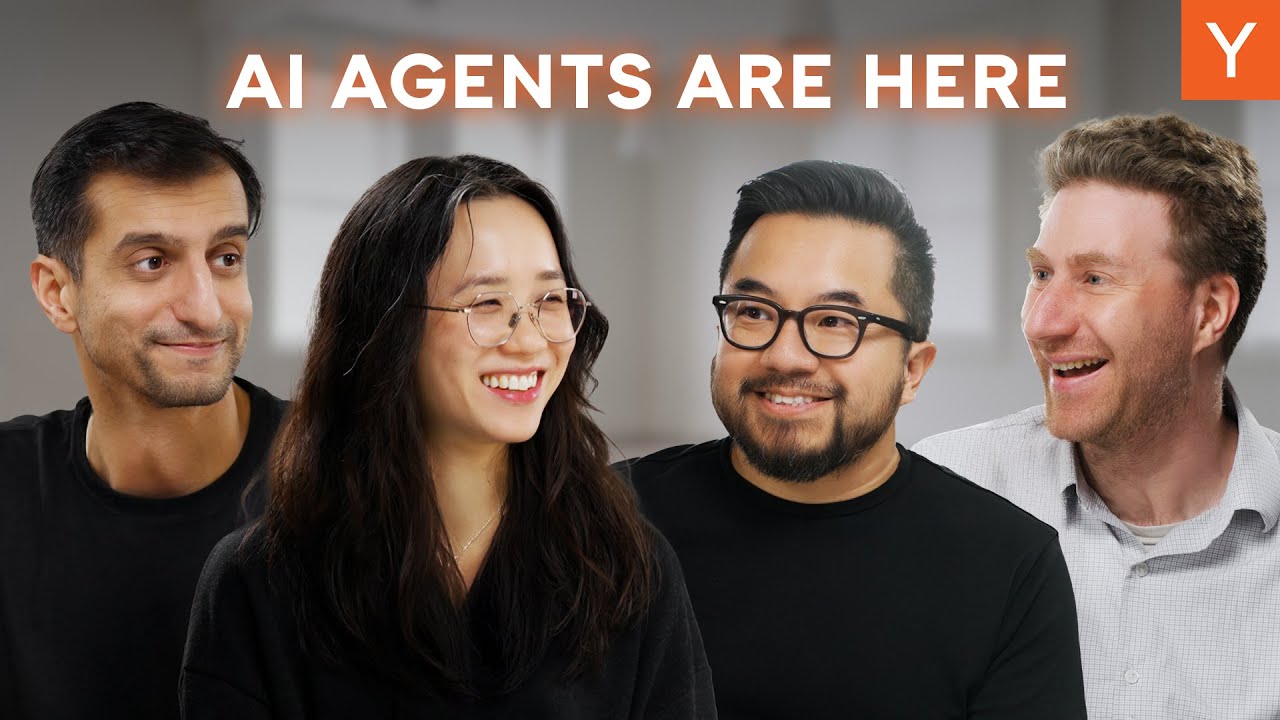
As AI models continue to rapidly improve and compete with one another, a new business model is coming into view - vertical AI agents. In this episode of the Lightcone, the hosts consider what effect vertical AI agents will have on incumbent SaaS companies, what use cases make the most sense, and how there could be 300 billion dollar companies in this category alone.
Chapters (Powered by https://bit.ly/chapterme-yc) -
0:00 Coming Up
1:01 Jared is fired up about vertical AI agents
7:25 The parallels between early SaaS and LLM’s
9:09 Why didn’t the big companies go into B2B SaaS?
12:25 How employee counts might change
16:25 The argument for more vertical AI unicorns
21:31 Current examples of companies/uses
35:22 AI voice calling companies
40:04 What is the right vertical for you as a founder?
41:36 Outro

This video is about Michael Seibel, Managing director of Y Combinator, the most innovative startup accelerator in the world, lessons learned from the Twitch startup journey and Y Combinator.
0:00 Intro
0:13 Twitch Story
5:48 Lessons learned from Twitch
8:45 Lessons learned from becoming a VC investor
11:19 Essential advice from YC
EO stands for Entrepreneurship & Opportunities.
We're looking for more inspiring stories of entrepreneurs all over the world, so don't hesitate to contact us! :)
Subscribe EO Channel🌏
👉🏻👉🏻 https://bit.ly/3S0Pacc
Listen the Extended Version on Podcast !
👉🏻👉🏻 Spotify: https://spoti.fi/43DMw1V
👉🏻👉🏻 Apple: https://apple.co/3UHPAG7
Business Inquiry💼
👉🏻👉🏻partner@eoeoeo.net

Apply to AI Startup School in SF: https://events.ycombinator.com/ai-sus
There’s never been a better time to launch an AI startup, but many prospective founders find themselves stuck when it comes to thinking of a good idea. In this episode, the Lightcone hosts look at different ways breakthroughs can be discovered.
Apply to Y Combinator, applications for X25 are due Feb 11: https://ycombinator.com/apply
Learn more about the startups mentioned in this episode:
Salient: https://www.trysalient.com
Diode: https://diode.computer
Spur: https://www.spurtest.com
Datacurve: https://datacurve.ai
David AI: https://www.withdavid.ai
Can of Soup: https://canofsoup.com
Happenstance: https://happenstance.ai
Ezdubs: https://www.ezdubs.ai
Egress Health: https://tryegress.com
HappyRobot: https://happyrobot.ai
Abel Police: https://abelpolice.com
Sweetspot: https://www.sweetspot.so
Lilac Labs: https://www.drive-thru.ai
Automat: https://www.runautomat.com
ParadeDB: https://paradedb.com
Reducto: https://reducto.ai
Juicebox: https://juicebox.ai
Giga ML: https://gigaml.com
Zepto: https://www.zeptonow.com
Chapters (Powered by https://bit.ly/chapterme-yc) -
00:00 - Intro
03:20 - First version
04:38 - Examples
10:55 - Pivoting
12:35 - Internships
22:20 - Going undercover
37:35 - Fundraising
41:45 - Product Market Fit
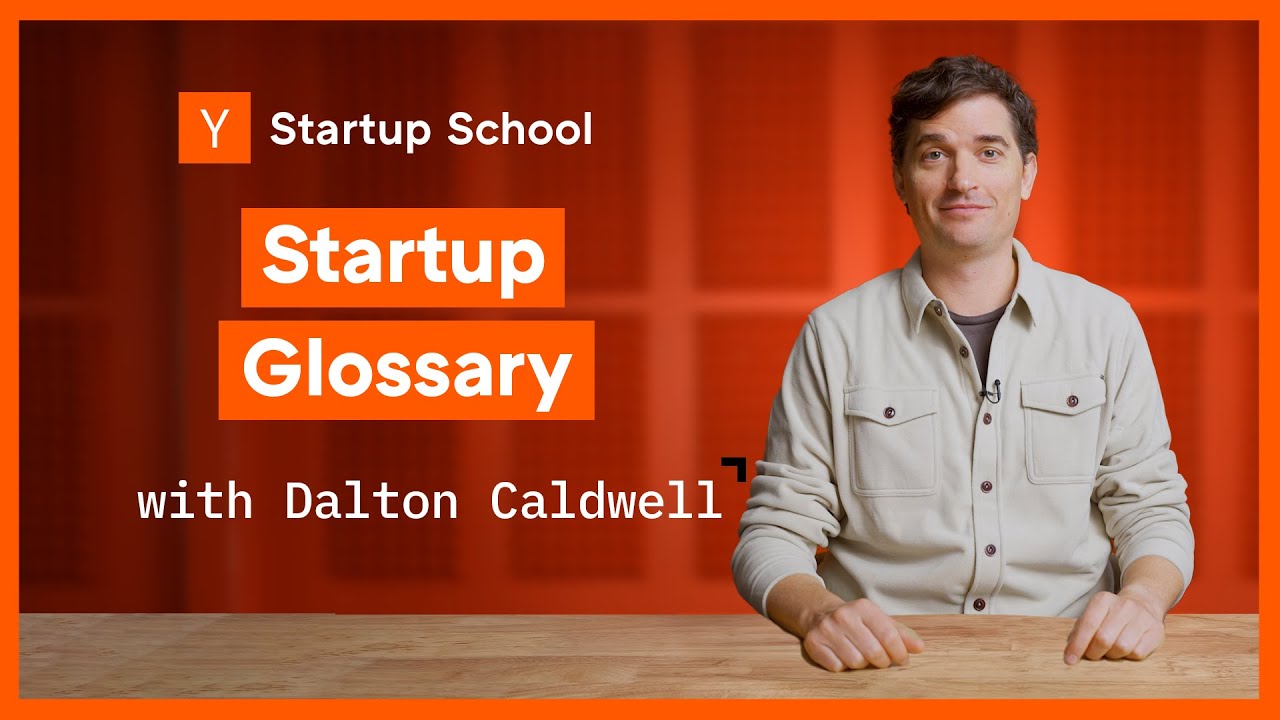
Burn rate, MVP, TAM — if you’re interested in tech and startups, you probably hear terms like these regularly. But what do they really mean? In this episode of Startup School, Managing Partner Dalton Caldwell breaks down some of the most common terminology that you’ll come across in the startup world.
Apply to Y Combinator: https://ycombinator.com/apply
Chapters (Powered by https://bit.ly/chapterme-yc) -
00:00 - Intro
00:30 - MVP
01:05 - VCs and Angels
03:20 - Profit and Burn
05:31 - Seed and Series A, B, C...
07:39 - PMF and Bootstrap
10:26 - Convertible Note and Equity
12:35 - TAM and Valuation
15:16 - IPO and ARR
17:40 - Outro
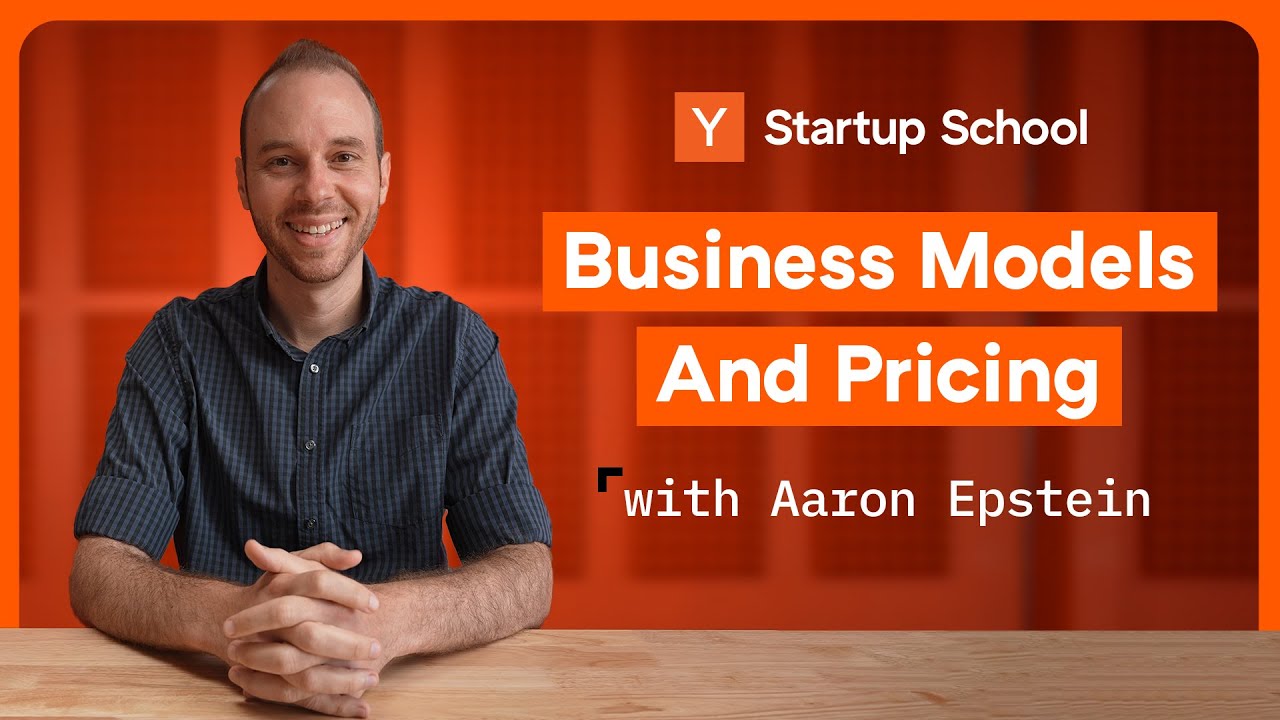
YC Group Partner Aaron Epstein talks about different startup business models, how to monetize, and how to price your product. Pricing and monetization is one of the most common questions from founders, and this talk outlines 9 business models as well as highlighting business model lessons from the top YC companies.
Business Model Guide: https://www.ycombinator.com/li....brary/Gh-business-mo
Apply to Y Combinator: https://yc.link/SUS-apply
Work at a startup: https://yc.link/SUS-jobs
Chapters (Powered by https://bit.ly/chapterme-yc) -
00:00 - Introduction
00:13 - Outline
00:42 - 9 business models that build billion-dollar companies
02:28 - Business model lessons from the top 100 YC companies
09:42 - Overall lessons
16:06 - 5 pricing insights from top YC companies
29:15 - Story of Segment - How to charge for your product
32:00 - Wrap-up - Key pricing insights
#startup #tech #entrepreneur

It’s easy to analyze your way out of taking the first step. It’s something we see a lot, particularly when founders try to choose what to build based on what they think VCs and investors will like.
In this episode of Dalton & Michael, we’ll talk about the risks of “thinking like an investor”, how to know when you’re stuck in this mindset, and how to unlearn it. We’ll also cover a short list of things that we’ve found actually matter when starting a company — it’s simpler than a lot of people think.
Apply to Y Combinator: https://yc.link/DandM-apply
Work at a Startup: https://yc.link/DandM-jobs
Chapters (Powered by https://bit.ly/chapterme-yc) -
00:00 - Coming Up
00:24 - How VCs Think
03:05 - What Matters
04:56 - What's Changed
06:41 - First Principles
08:41 - Fear
10:06 - Positive Feedback
11:18 - First Customers
12:56 - Scaling
14:19 - Macro Vs. Micro
15:54 - Unlearning
17:22 - Time With Users
20:36 - Superpowers
21:42 - No Exit Strategy

Avec son artisanat d'exception, ses services haut de gamme et ses tendances avant-gardistes, l'Afrique peut-elle s'ériger comme un acteur incontournable du luxe mondial ?
Première diffusion : 6 juin 2024
Tous les numéros de l'émission START UP sont à retrouver en intégralité sur l'application CANAL+ : https://bit.ly/startupsurlapp
Pour ne manquer aucune info de nos programmes rendez-vous sur nos différents comptes :
INSTAGRAM canalplusafrique
FACEBOOK canalplusafrique

Première diffusion : 29 août 2024
Tous les numéros de l'émission START UP sont à retrouver en intégralité sur l'application CANAL+ : : https://bit.ly/startupsurlapp
Pour ne manquer aucune info de nos programmes rendez-vous sur nos différents comptes :
INSTAGRAM canalplusafrique
FACEBOOK canalplusafrique

Mettre sa voiture en location, est-ce vraiment rentable ? En Côte d'Ivoire, la start-up Ahoko rent s'est spécialisée dans ce secteur.
Pour ne rien rater de votre émission économique préférée, abonnez-vous à la chaîne YouTube START-UP : https://bit.ly/AbonnerStartUp
Rejoignez-nous également sur Facebook : https://bit.ly/StartUpAfrFB

Première diffusion : 1er août 2024
Tous les numéros de l'émission START UP sont à retrouver en intégralité sur l'application CANAL+ : : https://bit.ly/startupsurlapp
Pour ne manquer aucune info de nos programmes rendez-vous sur nos différents comptes :
INSTAGRAM canalplusafrique
FACEBOOK canalplusafrique
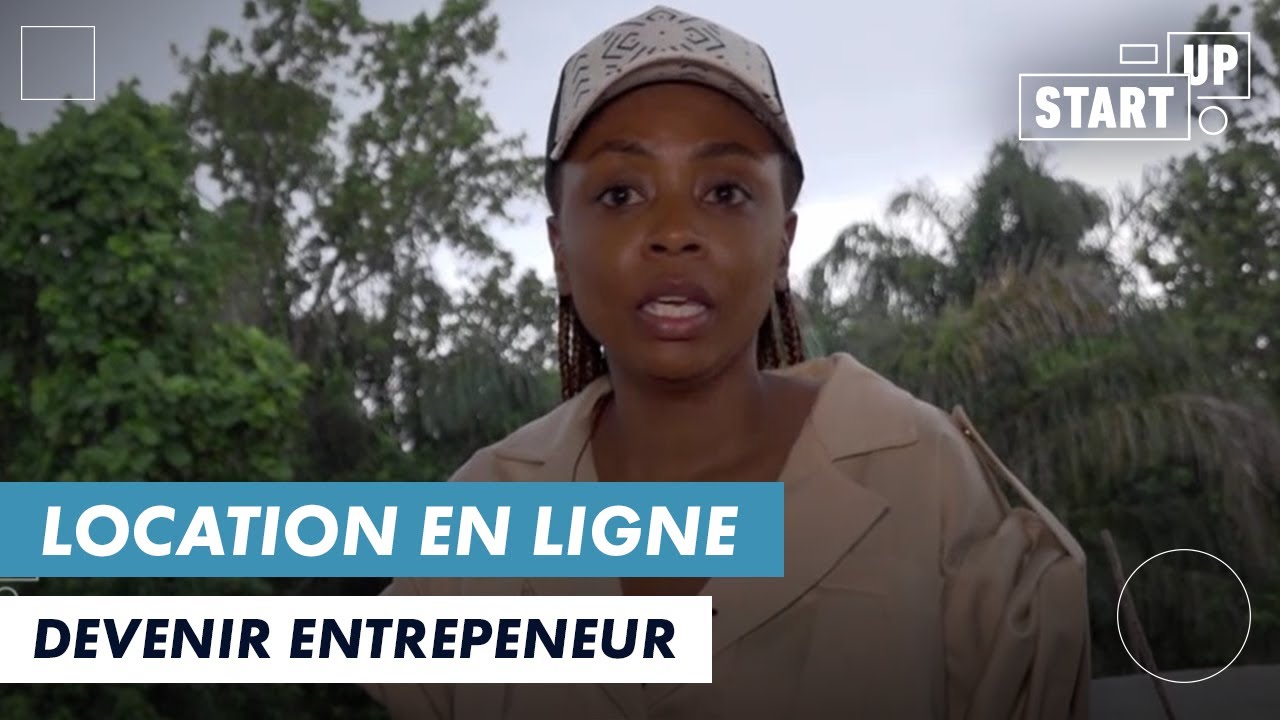
De nos jours, des sites en ligne offrent à leurs clients la possibilité de devenir patrons.
En Côte d'Ivoire, la créatrice de mode Maureen Ayité raconte son expérience d’entrepreneuse dans le domaine de la location.
Pour ne rien rater de votre émission économique préférée, abonnez-vous à la chaîne YouTube START-UP : https://bit.ly/AbonnerStartUp
Rejoignez-nous également sur Facebook : https://bit.ly/StartUpAfrFB
